Canarian Food: Gofio, Mojo, Papas and What to Try
On the menu of any restaurant in Lanzarote you will find words that mean nothing to a visitor and everything to a local: gofio, mojo, papas arrugadas. Canarian cooking is simple, born of farmers and fishermen, made from what the island gives — and on a land of volcanoes and little rain, that turns out to be more than you would expect. This is the guide to knowing what to order and what is in front of you.
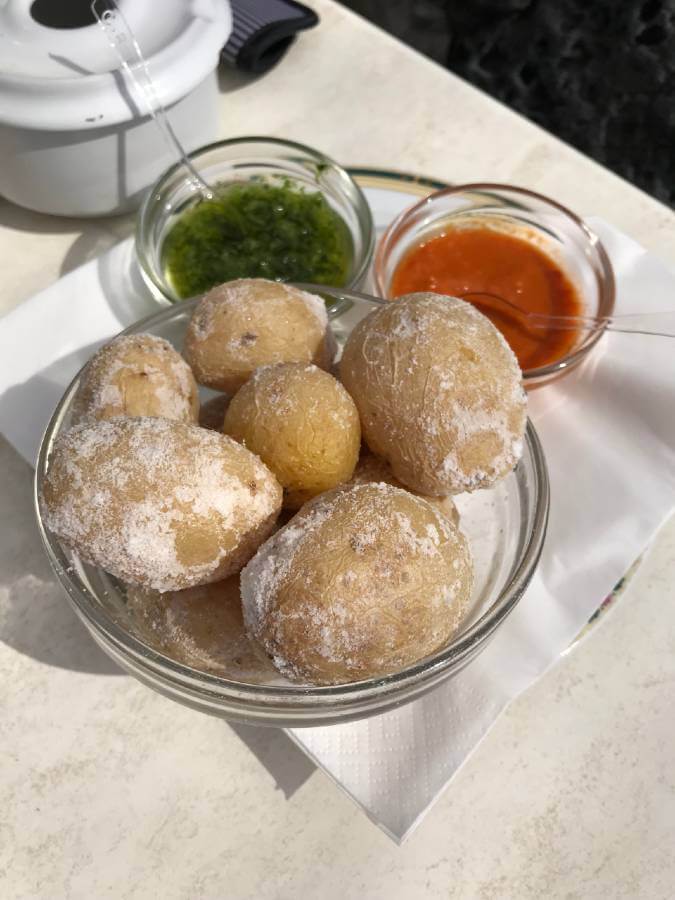
Papas arrugadas
The most recognizable dish in the Canaries and the simplest: small potatoes — often old, designation-of-origin varieties — boiled unpeeled in heavily salted water until the salt forms a fine white crust and the skin wrinkles. Traditionally they were boiled in seawater, because fresh water was scarce on the islands. They are eaten with your hands, dipped in sauce, as a side to meat or fish, or as a tapa on their own.
Mojo: red and green
The sauce that goes with almost everything. There are two families. Mojo rojo is made with paprika, garlic, cumin, oil and vinegar, and when it carries chili and bites it is called mojo picón; it usually accompanies meat and the potatoes. Mojo verde swaps the paprika for coriander (or parsley) and is served above all with fish. It is not a minor condiment: on many Canarian tables the mojo is the center, and every household and restaurant keeps its own version.
Gofio
The oldest food on the islands. Gofio is toasted grain flour — wheat, millet or a blend — milled fine, and it was eaten before the conquest: the base of the diet of the ancient Majos. It never disappeared. Canarians stir it into milk or coffee at breakfast, knead it into a compact ball (gofio amasado), drop it into broths (escaldón) and even turn it into ice cream. It has a toasted, nutty flavor, and it is pure island heritage.
Cheeses, fish and stews
Beyond the classic trio, Canarian cooking has plenty more. The goat cheeses — fresh, semi-cured or smoked — are often served grilled with mojo. Fresh fish rules on the coast: vieja, cherne and sama, almost always grilled with potatoes and mojo. Among the stews, sancocho (salt fish with potatoes and sweet potato) and ropa vieja (chickpeas and shredded meat) are Sunday food. And to finish, sweets like bienmesabe (almond and honey) and frangollo (a millet-and-milk dessert).
Where to try it
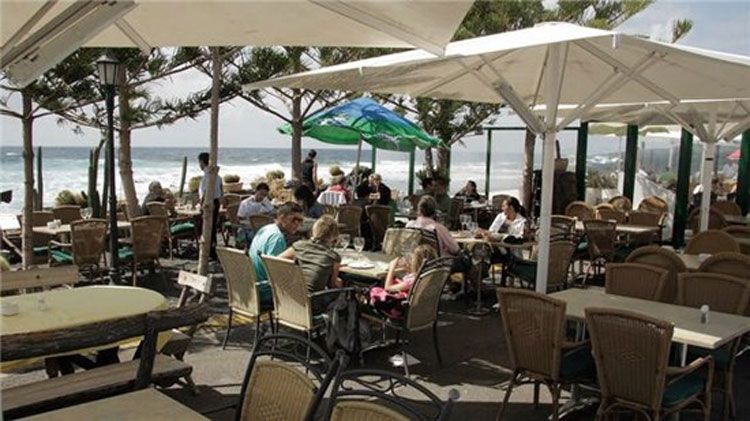
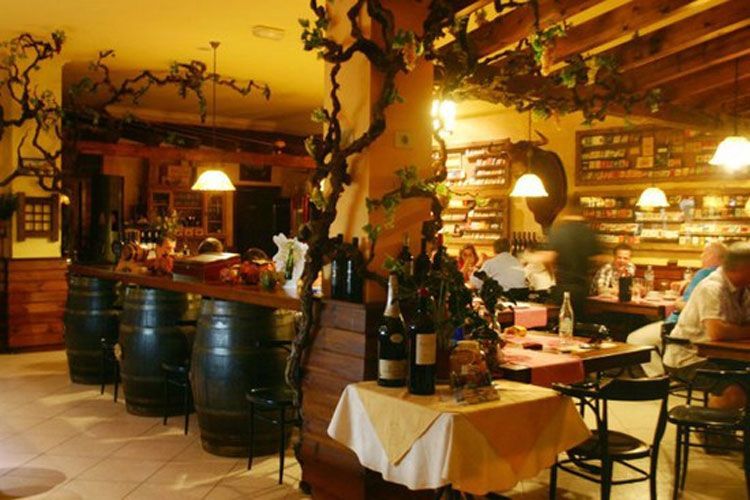
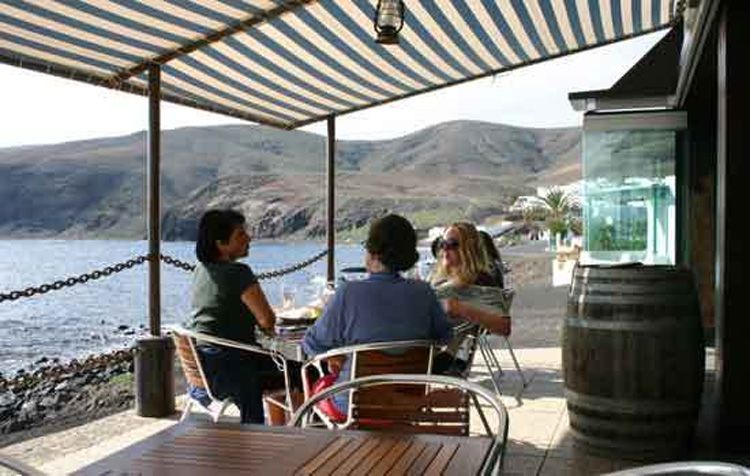
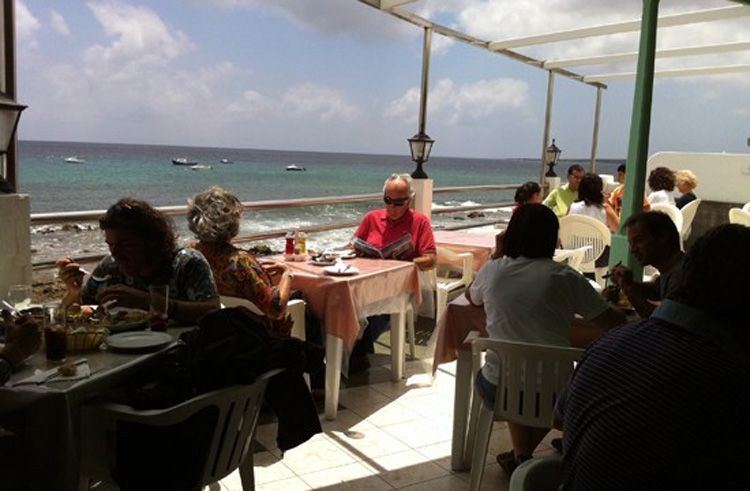
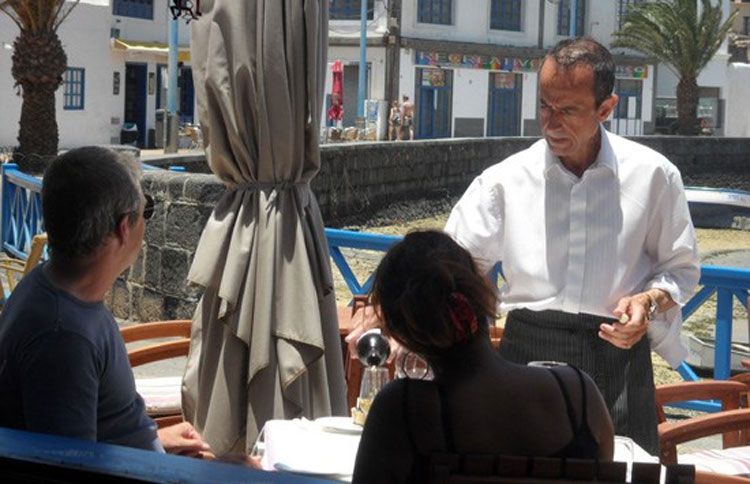
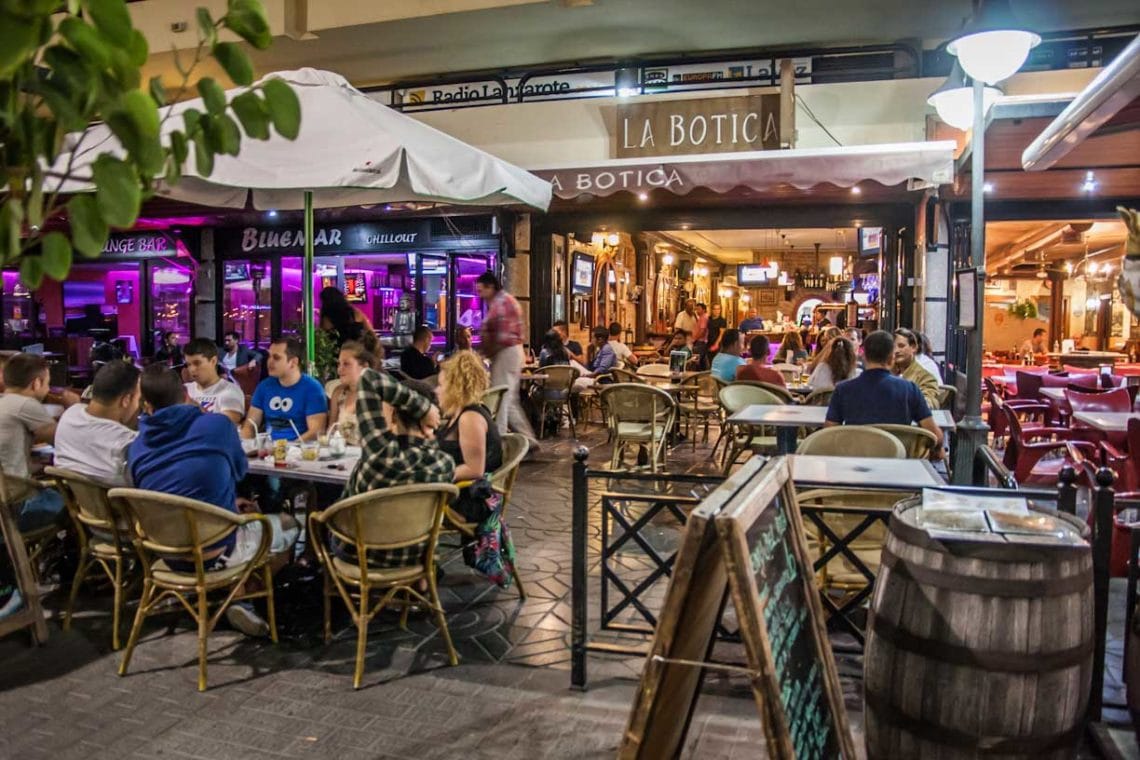
Canarian food is everywhere if you know where to look: in village restaurants more than on the coastal tourist strips, in the Teguise and Haría markets, and in the bodegas and guachinches where the house wine accompanies the cheese and potatoes. Ordering the day’s fish grilled in a fishing village, with its mojo and its papas, is still the best way to eat on the island.
→ Where to buy local produce and experience island culture, in our guide to things to do in Lanzarote; and for the wine that goes with all of it, Lanzarote wines.
Published: June 10, 2026. Official source: Cabildo de Lanzarote.