
Teguise Carnival 2026: México Lindo, Program and Dates
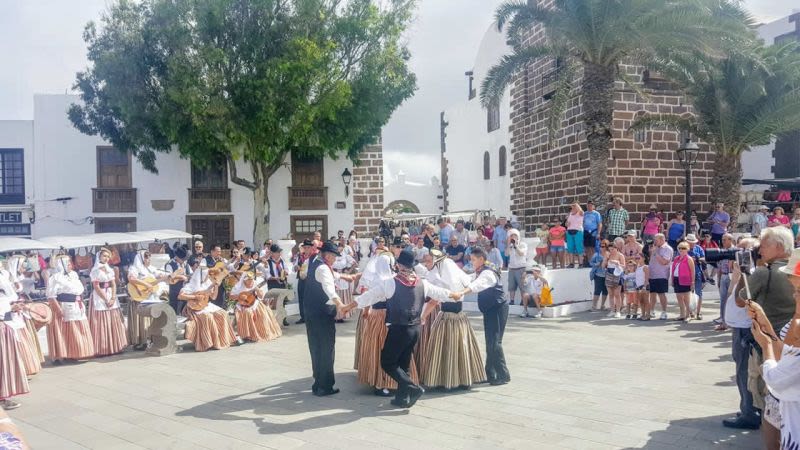
The Teguise Carnival 2026 crosses the Atlantic to dress up in catrinas, sugar skulls and papel picado. Under the motto “México Lindo y Más Allá — Day of the Dead,” the municipality rolls out two weeks of programming across Costa Teguise, the historic Villa and La Graciosa, from March 2 to 15. The Diabletes de Teguise — the most iconic figures in Lanzarote’s carnival tradition — share the stage with Mexican Day of the Dead imagery in one of the most visually striking fusions in recent memory.
Teguise Carnival 2026: Full Program
Main week: Costa Teguise and Villa de Teguise (March 2-8)
Monday, March 2 — Pasacalle Ritmo y Armonía
The Timanfeiros and Cumbacheros comparsas officially open the carnival with a street parade through Costa Teguise. Rhythm, color and the first costumes of the edition take over the resort area.
Tuesday, March 3 — Children’s Murga Encounter
The youngest groups in the municipality take the stage at Pueblo Marinero, proving that carnival satire runs in the blood from childhood.
Wednesday, March 4 — Adult Murga Encounter
The adult murgas take their turn at Plaza de Los Leones, Villa de Teguise. Sharp lyrics and biting humor — the hallmarks of Canarian murgas — fill the historic center.
Thursday, March 5 — Gran Gala Drag Queen
Pueblo Marinero car park, Costa Teguise. The drag gala has become one of the most anticipated spectacles in Canarian carnival: fantasy, provocation and performing art at its finest.
Friday, March 6 — Traditional Carnival of Teguise
The most authentic day on the program. Cultural and folk groups from Lanzarote, Gran Canaria and Tenerife gather in the Villa de Teguise for a celebration of carnival at its roots. The Diabletes de Teguise, with their carved wooden masks, cowbells and goatskins, lead the day alongside visiting groups. A day to understand that Canarian carnival is far more than costumes.
Saturday, March 7 — Gran Coso del Carnaval (Grand Parade)
The big day. At 5:30 pm, Avda. Islas Canarias in Costa Teguise fills with floats, comparsas, murgas and batucadas in the main carnival parade. After the Coso, an open-air street party with Sintonía Show, Ritmo Bakano, DJ Javi Fajardo and Rikabanda runs well into the early hours.
Sunday, March 8 — Daytime Carnival
Market Pasacalle at 12:00 pm and Daytime Carnival at Plaza de Los Leones from 1:00 pm. The festive close of the main week coincides with Teguise’s famous Sunday market, which takes on an extra dimension with carnival color.
La Graciosa: Carnival on the eighth island (March 9-15)
La Graciosa extends the festivities for one more week with its own program, keeping the Mexican allegory but adapted to the intimate spirit of the archipelago’s smallest island.
Wednesday, March 12: Drag Queen Gala in Caleta de Sebo.
Thursday, March 13: Carnival Queen’s Gala.
Friday, March 14: Grand Carnival Parade through the streets of Caleta de Sebo.
Saturday, March 15: Burial of the Sardine with a community barbecue and mariachis. The perfect finale: grilled sardines, live Mexican music and the farewell ritual of carnival by the sea.
Between March 9 and 11, children’s workshops, cultural activities and preparations for the main days take place.
The poster: “Serenata”
This edition’s poster, by Luis Ángel Argota Martín, is titled “Serenata” and depicts a catrina dancing with a diablete-mariachi. The image captures the essence of this year’s edition: the fusion of Lanzarote’s Diablete tradition with the iconography of Mexico’s Day of the Dead. A diablete in a charro hat and a catrina with cowbells — carnival as territory where anything goes.
The Diabletes de Teguise
The Diabletes are the most emblematic figures of Teguise Carnival and one of the oldest traditions in the Canary Islands. These characters, dressed in carved wooden masks with bull horns, goatskins and cowbells tied at the waist, roam the streets of the Villa chasing and startling passersby. Their origins trace back to ancient fertility rites, and their presence is exclusive to Teguise — you will not find Diabletes anywhere else in the archipelago.
Friday, March 6, during the Traditional Carnival day, is the best time to see them in action.
Practical information
Dates: March 2-15, 2026
Location: Costa Teguise, Villa de Teguise and La Graciosa
Main day: Saturday, March 7 (Grand Parade, 5:30 pm, Avda. Islas Canarias, Costa Teguise)
Entry: Free for all events
2026 theme: “México Lindo y Más Allá — Day of the Dead”
Getting there: Costa Teguise is a 15-minute drive from Arrecife and 10 minutes from the airport. The Villa de Teguise is 20 minutes from Arrecife via the LZ-30. To reach La Graciosa, the ferry departs from Órzola (northern Lanzarote) with 25-minute crossings; book ahead on weekends.
Tip: On Grand Parade day (Saturday 7), arrive early in Costa Teguise to secure a good spot on Avda. Islas Canarias. The parade starts at 5:30 pm, but the avenue fills up from mid-afternoon. If you want to combine market and carnival, Sunday the 8th is your day.
→ Complete guide: Lanzarote Carnival 2026
→ Lanzarote Cultural Agenda March 2026
→ Los Buches of Arrecife: the oldest carnival tradition in the Canaries
→ Lanzarote in March: weather, plans and why visit
Last updated: March 1, 2026. Official sources: Teguise Town Hall, Cabildo de Lanzarote.