Lanzarote in March: Weather, Plans and Why Visit
Lanzarote in March is the island at its tipping point: winter says goodbye with the last carnivals, spring arrives with more sunshine and temperatures nudging 23°C, and the summer crowds haven’t landed yet. It’s the sweet spot for anyone who wants beaches without the masses, volcanoes without the heat, and an island still running at its own pace.
This guide covers everything you need to know about visiting Lanzarote in March: real weather data, what to pack, the best things to do and how to enjoy the island with respect for its nature and people.
Lanzarote in March: weather and climate
March marks the shift from winter to spring. Temperatures climb from January and February, rainfall drops, and sunshine hours increase. It’s the month the island begins drying out after winter rains, with landscapes still carrying a green tint that vanishes by summer.
Temperatures
Daytime highs: 21-23°C (70-73°F).
Nighttime lows: 14-16°C (57-61°F).
Sea temperature: 18°C (64°F) — fresh but swimmable; surfers and divers use a short wetsuit.
Sunshine and rain
Lanzarote averages 7-8 hours of sunshine per day in March — more than most cities in central and northern Europe get in June. Rainfall is minimal: around 12-14 mm spread across 3-5 days, nearly always in brief showers. The island is the driest in the Canaries and March already points toward the bone-dry summer months.
Wind: the factor to plan for
The northeast trade winds blow regularly, especially on the east coast and exposed areas, with gusts of 20-30 km/h. That’s a blessing for surfers, windsurfers and sailors, but worth packing a windbreaker for afternoons and higher ground. Calima episodes (Saharan dust) are uncommon in March, though not impossible: if they arrive, temperatures can spike 8-10°C for a couple of days.
How March compares to home
London: 11°C, 4 hours of sun, frequent rain.
Berlin: 8°C, 4 hours of sun, snow still possible.
Dublin: 9°C, 3.5 hours of sun, rain guaranteed.
Lanzarote: 22°C, 8 hours of sun, beach days likely.
Why March is ideal for visiting Lanzarote
Shoulder season, off-season prices. March sits between winter and summer. Flights and accommodation are significantly cheaper than the June-to-September peak, and the island is well clear of summer crowds. If Easter falls late, you’ll have the entire month at low-season rates.
The carnival season finale. While Arrecife, Puerto del Carmen and San Bartolomé wrap up their carnivals in February, three municipalities celebrate in March: Teguise (with its centuries-old Diabletes masked figures), Playa Blanca and Tinajo. It’s your last chance to experience the most uninhibited festival in the Canarian calendar.
Peak whale-watching season. From November to April, the waters between Lanzarote and Fuerteventura welcome migratory species alongside the resident dolphins and pilot whales. March is one of the best months for spotting fin whales and sperm whales.
Spring in a volcanic landscape. Winter rains leave their mark: the Famara cliffs, the north of the island and the fringes of the lava fields show a green that contrasts beautifully with the black volcanic rock. Prickly pears begin to bloom, and in La Geria the Malvasía vines start their bud break — tiny green leaves filling the volcanic hollows in a sight unique to spring.
Perfect conditions for hiking and cycling. Not the searing heat of summer or the shorter days of winter. March offers the ideal window for exploring volcanoes, cliffs and coastal trails without exhaustion.
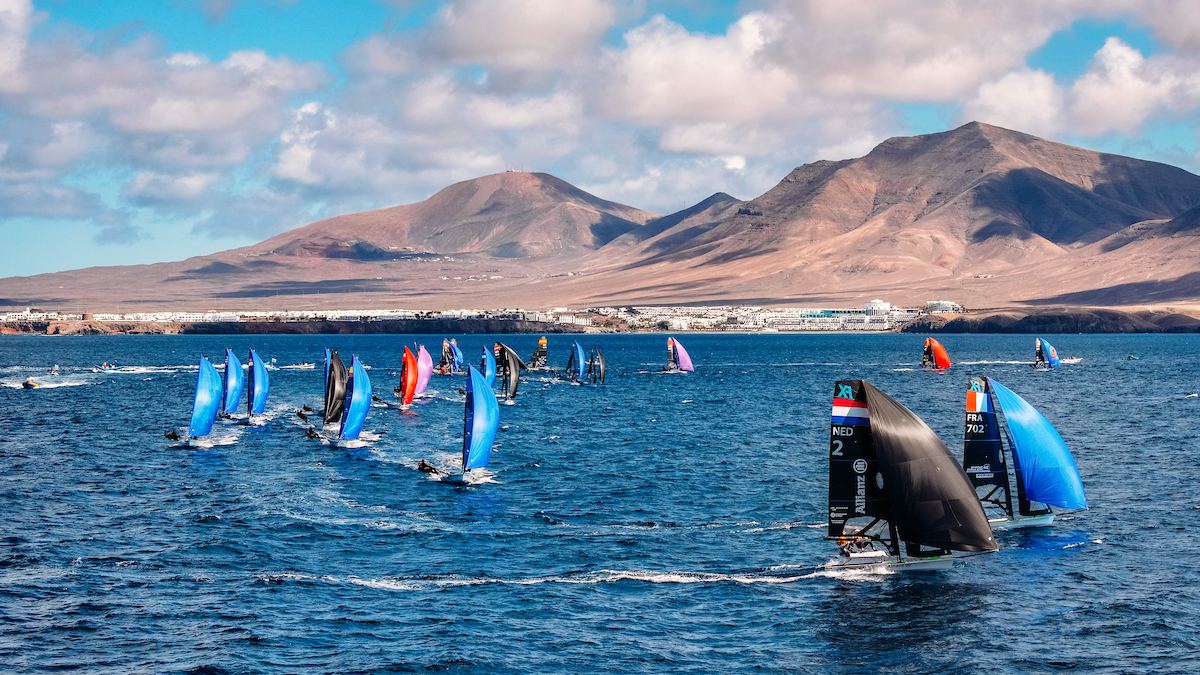
International sailing regattas. Marina Rubicón in Playa Blanca hosts Olympic-class sailing regattas from January through April. March is peak season, with international fleets turning the southern waters into a spectacle of color and competition.
What to do in Lanzarote in March
Volcanic hiking without the heat
March is, alongside February, the best month for hiking Lanzarote’s volcanoes. The mild temperatures make routes manageable that would be draining in summer.
Caldera Blanca: The island’s most spectacular route. A 9 km loop around the rim of Lanzarote’s largest crater with views across Timanfaya. Moderate difficulty, 3-4 hours.
Volcán El Cuervo: An easy 4 km walk that takes you inside a volcanic crater. Family-friendly. 1-1.5 hours.
Risco de Famara: The northern cliffs with views to La Graciosa. More demanding — best for experienced walkers.
La Geria: An evening walk through the volcanic vineyards. In March, the vines are budding: a detail you only see in spring.
Stay on the marked trails. Lanzarote’s volcanic ecosystem is fragile — the lichens covering the lava take decades to grow and a single footstep can destroy them.
Sailing and international regattas
Lanzarote has established itself as the winter base for European Olympic sailing. Marina Rubicón, at the island’s southern tip, hosts regattas for classes including ILCA, 49er and iQFOiL from January through April. March is the most active month, with fleets from over a dozen countries competing in waters that offer consistent wind and top-tier Atlantic conditions.
While the regattas are professional competition, the spectacle from shore is free and impressive: dozens of colorful sails against a backdrop of volcanoes and blue sky.
Beaches in March
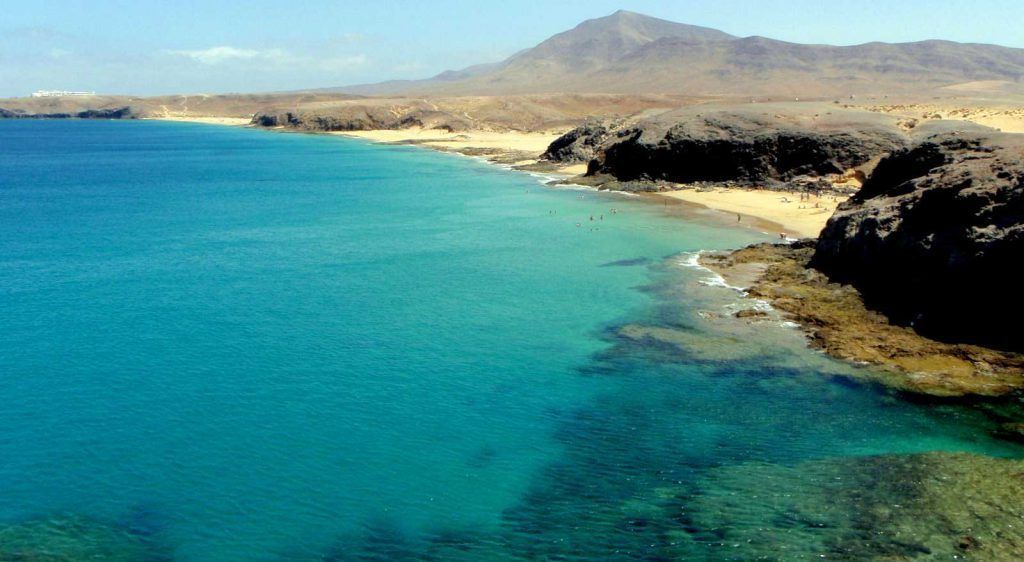
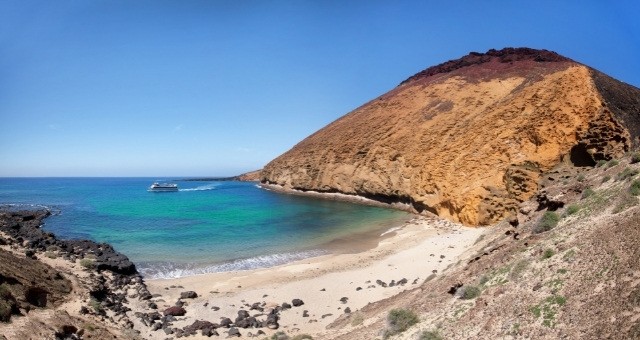
With highs of 22-23°C and sun for most of the day, March already allows comfortable beach sessions. The southern beaches (Papagayo, Playa Blanca, Puerto del Carmen) are more sheltered from the wind and the best bet for sunbathing.
Famara remains the island’s most dramatic beach, but in March the wind and swell make it better for surfers and walkers than sunbathers. Playa Chica in Puerto del Carmen is perfect for snorkeling in calm, clear water.
A reminder: always take your rubbish with you and avoid leaving cigarette butts in the sand. Lanzarote’s beaches belong to everyone.
Surfing and water sports
March is one of the best surfing months of the year in Lanzarote. Swells are consistent, the water temperature (18°C) is manageable with a short wetsuit, and there are fewer people in the lineup than in high season. Famara is the go-to for beginners and intermediates; La Santa and El Quemao offer more powerful waves for advanced surfers.
Consistent wind makes March excellent for windsurfing and kitesurfing. Costa Teguise and Playa de las Cucharas are the most popular spots.
Whale watching
Trips depart from Puerto del Carmen and Puerto Calero. March falls within the migratory season (November-April), when fin whales, sperm whales and pilot whales can be spotted alongside the resident bottlenose dolphins. Dolphin sightings are highly likely year-round; whales are rarer, but March offers good odds.
Choose operators that respect safe distances and don’t chase the animals. Responsible watching ensures these species keep returning to our waters.
Wine tourism in La Geria
The La Geria valley, with its vineyards grown in volcanic hollows protected by semicircular stone walls (zocos), is unlike anywhere else on earth. March adds a draw no other month can match: vine bud break. The Malvasía vines wake from winter dormancy, filling the black volcanic hollows with tiny green leaves — a photogenic contrast you won’t see in summer.
Wineries offer tastings and tours year-round. In March, without summer crowds, the experience feels more personal. Bodegas El Grifo, Stratvs and La Geria all run guided visits with tasting.
César Manrique’s Art Centres
The seven Art, Culture and Tourism Centres are at their best in March: no queues, spring light, and a constant 19°C in the underground spaces. Jameos del Agua, the Cueva de los Verdes, the Jardín de Cactus and the Mirador del Río can be enjoyed at your own pace.
Tip: visit Jameos or the Cueva first thing in the morning. You’ll have the spaces almost to yourself and you’ll help spread visitor flow across the day.
Markets and local life
The weekly markets run year-round and March is no exception:
Teguise Market: Sundays from 9:00 am to 2:00 pm. The largest market in the Canary Islands, with handicrafts, local produce and a festive atmosphere in the streets of the former capital.
Haría Market: Saturdays from 10:00 am to 2:30 pm. More intimate, set in the Valley of a Thousand Palms.
Buying local products — La Geria wine, cheese, mojo, aloe vera — is a direct way to support the island’s producers.
Cultural events in March
March packs more cultural programming than you might expect:
The final carnivals: Teguise, Playa Blanca and Tinajo hold their carnivals in March, each with its own theme. The Traditional Carnival of Teguise, featuring the centuries-old Diabletes masked figures, is a cultural experience unlike anything else on the island.
Sonidos Líquidos: The season’s first Belingueo (an intimate concert paired with local wines and gastronomy) typically takes place in March at a heritage venue on the island.
St. Patrick’s Festival: Puerto del Carmen hosts an annual festival each March with live music, a parade and Irish atmosphere that draws thousands.
Escena Lanzarote: The performing arts season continues with theatre and dance at the Art, Culture and Tourism Centres.
Easter: Depending on the year, Holy Week may begin in the final days of March. The processions in Teguise and Arrecife are the most notable on the island.
→ Check the Lanzarote Cultural Agenda for March for this year’s full program.
What to pack
March in Lanzarote calls for layers and versatility. Days are warm, nights are cool, and the wind is always a factor.
Essentials: lightweight daywear (t-shirts, shorts or light trousers), a light sweater or fleece for mornings and evenings, a windbreaker, comfortable shoes (hiking shoes if you plan to explore), sun protection (SPF 30+ cream, sunglasses, hat), swimwear always.
Optional but useful: a light rain jacket (just in case), a short wetsuit for surfing or snorkeling, binoculars for birdwatching and whale watching.
Tips for a responsible visit
Lanzarote was designated a UNESCO Biosphere Reserve in 1993. Its volcanic landscapes, marine ecosystems and sustainable tourism model are fragile and valuable. A few ways to help:
Stay on marked trails — lichens on the lava take decades to grow. Always take your rubbish from beaches and trails. Choose tour operators who respect the environment (responsible whale watching, small group excursions). Support the local economy: buy from markets, eat at restaurants serving local produce, visit wineries. Respect traditions — carnivals and patron saint festivals are living culture, not tourist entertainment.
Practical information
Flights: Lanzarote has direct connections from major European cities year-round. March frequencies are good and prices competitive.
Car hire: Essential for exploring at your own pace. Roads are good and distances short — the farthest point is a 45-minute drive from the airport.
Accommodation: March is shoulder season. Prices are lower than summer with availability across all tourist areas: Puerto del Carmen, Costa Teguise, Playa Blanca.
Public holidays: Carnival Tuesday is a local holiday in five municipalities (dates vary by year). If Easter falls in March, Holy Thursday is a regional holiday in the Canary Islands and Good Friday is a national holiday.
More Lanzarote guides by month
Every month has its character. Browse our monthly guides to find the one that fits your trip:
Last updated: March 2026. This guide is updated annually with references to current-year events. Official sources: Lanzarote Island Council, AEMET, Turismo Lanzarote.