Romería de los Dolores: Lanzarote’s Great Pilgrimage
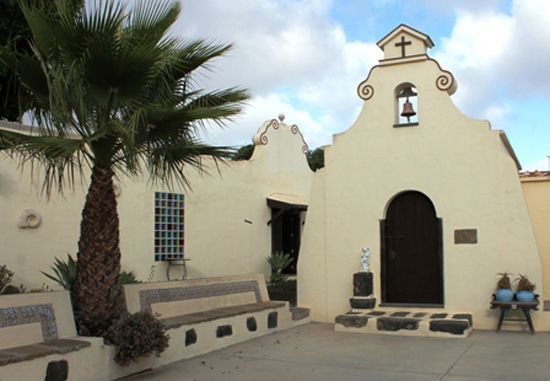
The Romería de los Dolores is Lanzarote’s largest pilgrimage. Each September, thousands of people walk from every corner of the island to the hermitage of Mancha Blanca, in Tinajo, to lay their offerings before the Virgen de los Volcanes, Lanzarote’s patroness since 1736. The feast day, September 15, is an island-wide public holiday, and the pilgrimage itself is held on a Saturday close to that date.
From the Timanfaya Eruptions to Island Patroness
The devotion was born from the greatest catastrophe in Lanzarote’s history. Between 1730 and 1736, the Timanfaya eruptions buried much of the island’s west and destroyed its best farmland. Local tradition tells that, as the lava advanced on Mancha Blanca, a Franciscan friar led the villagers in prayer to the Virgin of Sorrows and planted a cross in the flow’s path. At the foot of that cross, the town’s oral history recounts, the lava stopped.
The village was saved, the Virgin earned the name Virgen de los Volcanes — the Virgin of the Volcanoes — and Lanzarote took her as its patroness. Almost three centuries later, the Mancha Blanca hermitage remains the island’s spiritual center, and the celebration around it belongs to all seven municipalities. In November 2024, the image was also carried to Arrecife in a historic bajada, a rare event that drew the whole island.
The Romería de los Dolores, Step by Step
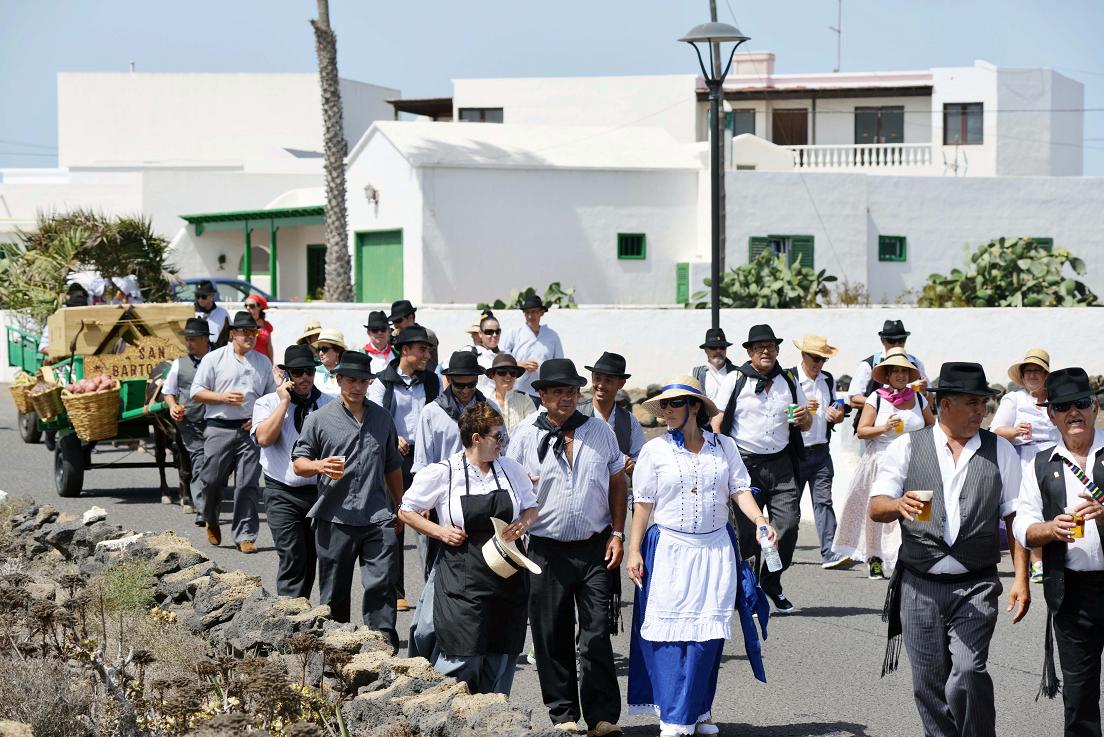
Pilgrimage day begins before dawn. Groups of walkers set out from points all over the island — with family, friends, guitars and timples — and gather around Tinajo by midday to rest and share food and local wine. Around four in the afternoon, the romería departs from near the church of San Roque, with carts drawn by donkeys and camels, traditional music, and thousands of people dressed in romero costume.
The procession reaches the Mancha Blanca hermitage around nine at night. There the pilgrims lay their offerings at the Virgin’s feet: non-perishable goods, at the organizers’ express request, destined for social causes. It is the second-largest romería in the Canary archipelago, after El Pino in Gran Canaria, and holds Spain’s Fiesta de Interés Turístico Nacional designation.
The September Fiestas
The pilgrimage is the central act of a program that fills the first two weeks of September. The fixed components repeat every year: the ventorrillos (traditional food stalls) and the pregón that open the celebrations, the Baile del Romero with folk music groups the day after the romería, the Festival Nanino Díaz Cutillas of folklore — named for the Lanzarote broadcaster and cultural promoter — and the Feria Insular de Artesanía, the island craft fair that brings well over a hundred artisans from across the Canaries to Mancha Blanca during the main days.
On September 15, the feast of Nuestra Señora de los Dolores, the solemn religious service closes the cycle. As an island-wide holiday, it is one of the few days of the year when all of Lanzarote pauses: shops closed, offices closed, and the road to Tinajo busy from early morning. The Ayuntamiento de Tinajo publishes the full program in late August.
How to Experience the Tradition
During the fiestas, the most direct way is to join the pilgrimage: you can walk from Arrecife or from any village along the way, or join in Tinajo for the final stretch to Mancha Blanca. Anyone taking part should know that romero dress is not a costume but a sign of respect — the organizers expressly ask participants to come dressed as pilgrims — and that offerings are handed over on arrival at the hermitage.
Outside September, the Mancha Blanca hermitage can be visited any day of the year, and the village sits a few minutes from the Timanfaya National Park Visitor Center, which explains the eruption behind this whole story. Seeing the lava fields first and the cross of the tradition afterward makes it easier to understand why this devotion remains so alive.
Practical Tips
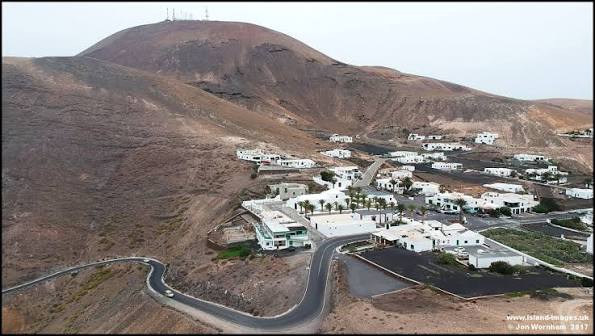
Mancha Blanca lies on the LZ-30 road between Tinajo and Tao, about 20 kilometers from Arrecife. Parking areas are set up near the hermitage on the main days, but arrive with time to spare: the crowds run into the tens of thousands. For the pilgrimage itself, bring comfortable shoes, water and sun protection; the final stretch moves at the procession’s pace, unhurried. The craft fair runs during daytime hours and entry is free.
More Information
The story behind this fiesta begins at Timanfaya National Park, and its natural partner on the calendar is San Marcial del Rubicón, the island’s patron saint, celebrated in July in Femés. After the fiestas, Arrecife takes over musically with Arrecife en Vivo, held precisely on the Fridays following Los Dolores. For the island as a whole, our guide to what to do in Lanzarote gathers the essentials, and the month’s Cultural Agenda lists what’s currently on.
Published: Aug 28, 2026. Official sources: Ayuntamiento de Tinajo.