Sustainable Tourism in Lanzarote: The Island That Set Limits
Sustainable tourism in Lanzarote is not a recent slogan: the island was the first in Spain to put a ceiling on its tourism growth, in 1991, when its island plan cut the accommodation places on the books by around 60%, from 250,000 to roughly 100,000. Two years later UNESCO declared it a Biosphere Reserve. This guide explains where that model comes from, which institutions hold it up today, and what it means in practice for anyone visiting.
A ceiling on growth since 1991
The Plan Insular de Ordenación del Territorio (PIOT) of 1991 is the document that changed course. Before it, the municipalities’ plans added up to some 250,000 potential tourist beds on an island of 846 square kilometers. The PIOT cut that to around 100,000, set growth rates by four-year periods, and adopted a yardstick that was rare in Spanish planning at the time: the territory’s carrying capacity. The Lanzarote Biosphere Reserve, the Cabildo body that monitors the model, sums it up as a plan that sought “a new development criterion based on quality” and “not to exceed the island’s carrying capacity.”
UNESCO took notice. On Oct 7, 1993 it declared Lanzarote a Biosphere Reserve, and with a twist: together with Menorca, the island opened a new strategy in the Man and the Biosphere program that favored territories “of high environmental value but at the same time under intense human pressure.” In other words, the award did not go to an untouched landscape but to a society that had decided to live with tourism by giving it rules. Today 41.6% of the island’s surface is protected under some legal designation.
In the early 2000s the Cabildo also approved a tourism moratorium, the first in the Canaries, which halted new hotel licenses. The effect shows in the Centro de Datos de Lanzarote figures: the island had 43,943 beds in tourist establishments in 1991 and around 66,000 in 2024, growth of 50% over three decades that flattened out from 2009. That is still well below the 100,000 ceiling the PIOT set.
César Manrique and the idea that the landscape is the asset
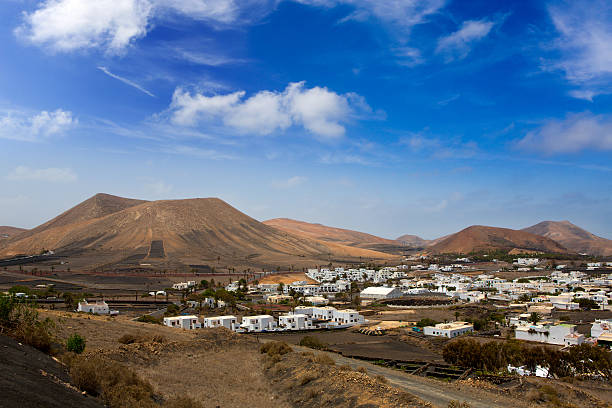
No tourism model stands on rules alone. Lanzarote’s has an acknowledged author: the artist César Manrique (1919–1992), who came home from New York in 1966 with a conviction the foundation that bears his name describes as “adapting the place for tourism under scrupulous respect for the environment.” Manrique persuaded the Cabildo that the volcanic landscape was the asset, and that architecture had to adapt to it rather than the reverse: low white houses, green or blue woodwork, not a single billboard on the roads.
His public works are the proof: Jameos del Agua (1964–1966), the El Diablo restaurant in Timanfaya (1970), Mirador del Río (1971–1973), the Casa Museo del Campesino (begun 1968), the Castillo de San José (1976) and the Jardín de Cactus (1990). All are interventions in the natural setting that the Cabildo now runs through its Centers of Art, Culture and Tourism, and all remain among the island’s most visited places. Our guide to César Manrique covers his life and work; the Timanfaya guide explains how to visit the national park without leaving the authorized routes.
Biosphere Reserve, Geopark and a World Charter
Protection has been added in layers. In 1995 Lanzarote hosted the World Conference on Sustainable Tourism, which produced the World Charter for Sustainable Tourism, the first international document to set principles for the sector. In 2015 UNESCO added a second distinction: the Lanzarote and Chinijo Islands Global Geopark, nearly 2,500 square kilometers of land and sea, with close to 70 geosites and the largest marine reserve in the European Union, 700 square kilometers around La Graciosa and the islets.
And in November 2025 the island hosted again: at Jameos del Agua the World Charter for Sustainable Tourism +30 was adopted, an update with eleven principles running from local well-being to decarbonization. Cabildo president Oswaldo Betancort framed it this way, speaking in Spanish: “Our citizens demand that we protect the territory, the landscape and our identity.” Our La Graciosa guide shows how that balance works on the eighth island, where visitors’ private cars are not allowed and access is by ferry only.
What the island measures today: value, not volume
Every month the Cabildo publishes, through the Centro de Datos de Lanzarote, tourist arrivals, daily spend per visitor, accommodation revenue and the average room rate. How it reads those figures is the key to the current model: grow in what each visitor contributes, not in how many arrive. Betancort has said so plainly: “We don’t want to base our tourism model on permanently growing the number of visitors.” SPEL-Turismo Lanzarote, the public promotion company, defends the same idea: generate more tourism value without tying it “to a constant increase in arrivals.”
Control reaches the supply side too. The Cabildo inspects vacation rentals and has reported withdrawing 896 non-compliant properties from the tourist market in a single year. According to the Centro de Datos, the island has around 200 open tourist establishments and more than 30,000 vacation-rental beds, a figure the institutions watch closely because it competes directly with housing for residents.
Practical tips: how to be a good visitor
The model works if the person visiting understands it. These are the choices that carry the most weight:
- Water. Lanzarote has no rivers or usable aquifers: tap water is desalinated from the sea and costs energy. Short showers and reused towels are not a token gesture here.
- Car and landscape. Park only in marked areas, don’t drive or walk on the picón or lava off the trails, and don’t take stones or sand. In Timanfaya, access to the park is by the official routes only.
- Spending locally. The markets, the La Geria bodegas and the restaurants serving Canarian food are the most direct way for your money to stay on the island. Lanzarote’s wines grow in a protected landscape that only survives if they sell.
- Beaches. Respect the flags, don’t camp outside authorized areas, and leave the Papagayo coves as you found them: they have no daily cleaning.
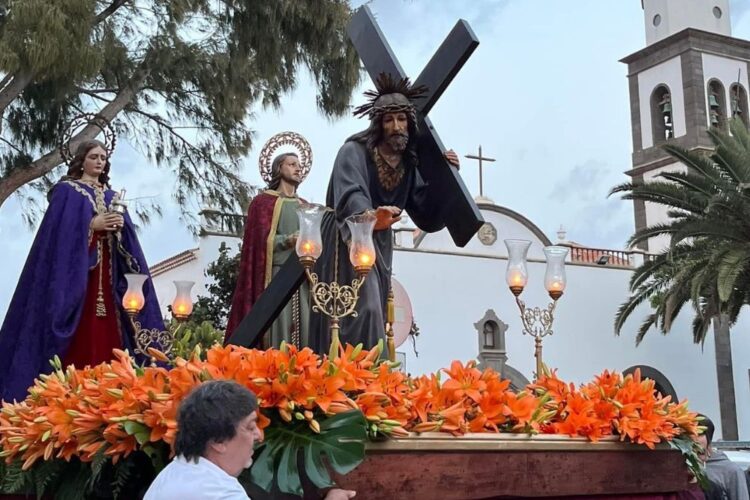
- Fiestas and romerías. They are the residents’ celebrations, not shows for tourists. You are welcome; respect means dressing with common sense at processions, not blocking the way for photos, and buying at the local stalls.
- Accommodation. If you rent a vacation home, check that it has a registration number. The ones without it are the ones the Cabildo removes from the market.
Frequently asked questions
Does Lanzarote cap the number of tourists who can come?
There is no entry quota. The limit is on supply: the number of accommodation places the island plan allows to be built, and the vacation rentals that can operate legally.
What is the difference between the Biosphere Reserve and the Geopark?
Both are UNESCO designations. The Biosphere Reserve (1993) recognizes the whole island as a territory where conservation and development coexist; the Geopark (2015) protects and interprets its geological heritage, including the Chinijo archipelago and its marine area.
Can I explore Timanfaya on my own?
No. The interior of the national park is visited on the Ruta de los Volcanes from the Montañas del Fuego visitor center, or on authorized guided routes. Public roads skirt the park, but you cannot leave them.
More information
To plan a visit that fits this model, start with our guide to things to do in Lanzarote. The institutional sources behind the model are the Lanzarote Biosphere Reserve and the Lanzarote and Chinijo Islands Geopark.
Published: Sep 12, 2026. Official sources: Reserva de la Biosfera de Lanzarote, Centro de Datos de Lanzarote, Lanzarote and Chinijo Islands Geopark, Fundación César Manrique, Gobierno de Canarias, Ministerio para la Transición Ecológica, Cabildo de Lanzarote.